Does Light Affect Kombucha Fermentation Quality? Complete Guide
Brewing kombucha is truly an art of balancing several factors: temperature, ingredients, fermentation time, and environmental conditions. Among these, lighting is often overlooked, even though it can significantly impact the final product's quality. Should you keep your SCOBY (symbiotic culture of bacteria and yeast) in the dark? Can light improve fermentation? In this article, we'll explore how different types of lighting affect kombucha fermentation and provide practical tips to achieve the best results.
How Does Light Influence the Kombucha Fermentation Process?
To understand lighting’s impact on kombucha, it’s important to first grasp the basics of fermentation and the nature of the microorganisms involved.
Light Sensitivity of SCOBY Components
The SCOBY is made up of various bacteria (mainly Acetobacter) and yeast strains, each with different light sensitivities:
- Acetobacter (main SCOBY component):
- Moderately sensitive to ultraviolet (UV) light
- Can alter metabolic activity under prolonged strong light exposure
- Yeast cultures (secondary key component):
- More resistant to light compared to bacteria
- Some strains may even utilize light as an additional energy source
Effects of Different Lighting Types on Fermentation
Natural Sunlight:
Direct sunlight contains a broad spectrum of radiation, including UV rays, which can have both positive and negative effects:
- Potential Benefits: Moderate indirect sunlight can stimulate the metabolism of certain SCOBY components
- Potential Risks: Direct sunlight can:
- Raise fermentation temperature (greenhouse effect inside the jar)
- Damage sensitive microorganisms due to UV exposure
- Accelerate oxidation of aromatic compounds, altering flavor
Artificial Lighting:
Different types of artificial light have varying impacts:
- Fluorescent light: Produces less heat but emits small amounts of UV radiation
- LED lighting: Typically UV-free and generates minimal heat
- Incandescent bulbs: Generate significant heat that can raise fermentation temperature
Scientific Research on Light's Impact on Fermentation
While specific studies on light’s effect on kombucha are limited, research on fermentation in general highlights:
- UV radiation can inhibit the growth of certain yeast and bacterial species, potentially slowing fermentation.
- Experiments with other fermented products (e.g., wine) show light can accelerate oxidation of phenolic compounds, affecting taste and aroma.
- Photochemical reactions triggered by light can alter the structure of antioxidants present in tea, possibly reducing their benefits.
Optimal Lighting Conditions for Different Fermentation Stages
Primary Fermentation:
During primary fermentation, when the SCOBY actively converts sugars into organic acids and other compounds, ideal conditions include:
- Recommended Lighting: Indirect diffused light or semi-darkness
- Avoid: Direct sunlight and bright artificial lighting
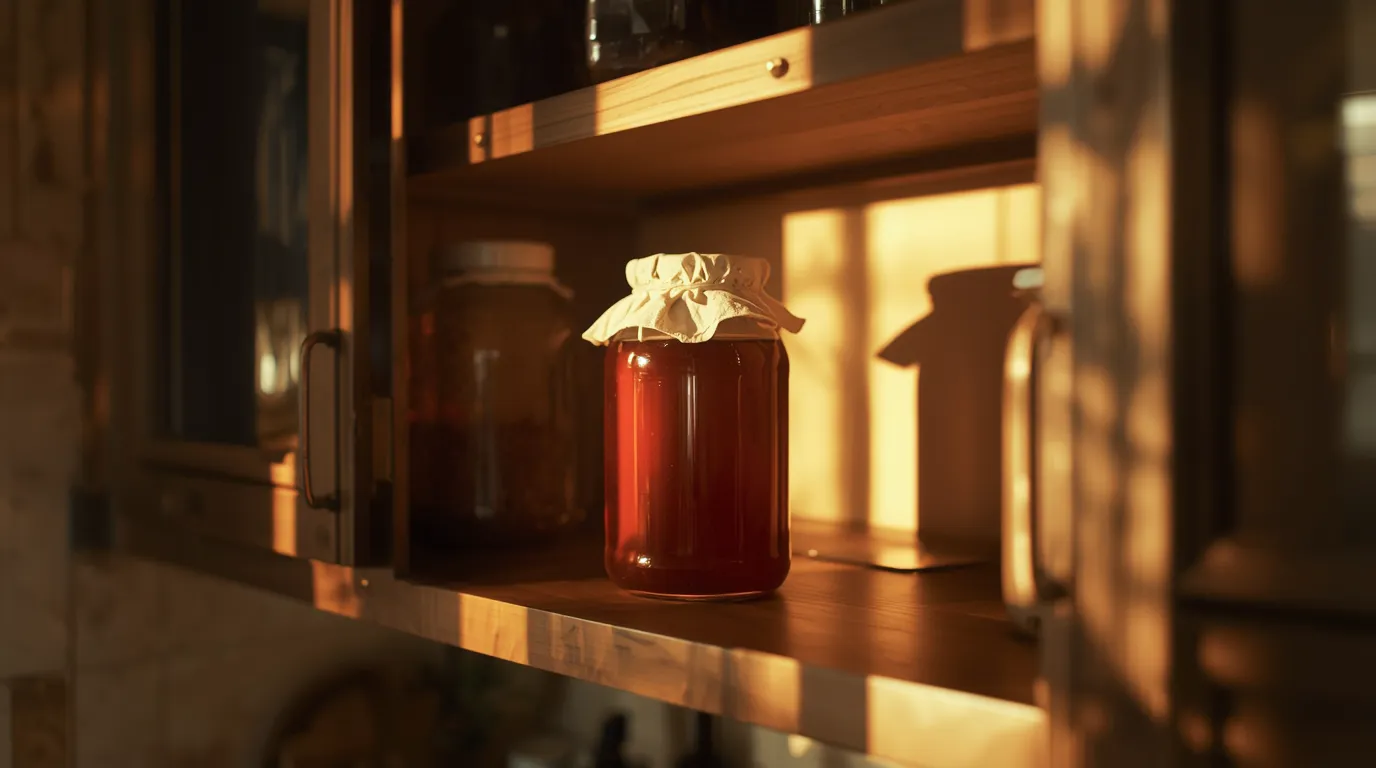
- Ideal Location: Kitchen cabinet with opaque doors, pantry, or a kitchen corner shielded from direct light
Secondary Fermentation:
During secondary fermentation (after SCOBY removal, when kombucha develops additional flavor and carbonation in sealed bottles):
- Recommended Lighting: Darkness or very low light
- Reason: Darker conditions protect aromatic compounds from oxidation and alteration
- Practical Options: Closed kitchen cabinet, box, or a specialized dark fermentation bag
Practical Experiments: Light vs. Darkness
It’s interesting to compare fermentation results under different lighting conditions:
Comparison Experiment:
Some kombucha enthusiasts conducted home experiments by splitting one batch into two parts and fermenting them under identical conditions except for light exposure:
Fermentation Results in Darkness:
- Typically a smoother, more balanced flavor
- Less pronounced acidity
- Lighter color of the finished drink
- Slightly slower fermentation (1-2 days longer)
Fermentation Results Under Diffused Light:
- Often a more pronounced, "brighter" flavor
- Faster fermentation (1-2 days shorter)
- Slightly higher acidity
- Darker color of the finished drink
Practical Tips for Optimal Lighting
1. Protect from Direct Sunlight
- Use dark cloths to cover the jar while allowing airflow
- Place your kombucha jar away from windows with direct sunlight
- If using a clear jar, wrap it with dark paper or fabric, leaving the top open for air circulation
2. Choose the Best Location for Fermentation
Optimal spots considering lighting:
- Kitchen cabinet with infrequent opening
- Pantry or small storage room with moderate temperature
- Kitchen corner shielded from direct light
- Dedicated fermentation chamber with controlled lighting
3. Balance Multiple Factors
Lighting is just one factor affecting fermentation. Balance it with:
- Temperature (optimal is 75-85°F / 24-29°C)
- Air circulation (important for SCOBY health)
- Humidity (moderate, with no condensation)
4. Adjust for Seasonal Lighting Changes
Natural lighting varies throughout the year, so adjust conditions accordingly:
- Summer: Take extra care to protect kombucha from direct sunlight
- Winter: Place kombucha where it can get slightly better light to compensate for shorter days
Frequently Asked Questions About Light and Kombucha
Can kombucha ferment completely in total darkness?
Yes, kombucha ferments perfectly well in complete darkness. In fact, many experienced brewers prefer these conditions for a more balanced flavor and protection from possible negative light effects.
Can UV light kill the SCOBY?
Prolonged exposure to strong UV light (e.g., direct sunlight for several days) can potentially harm some microorganisms in the SCOBY. However, total destruction is unlikely, as the culture has some self-protection mechanisms. Still, it’s best to avoid such exposure.
Does the color of the fermentation vessel affect fermentation quality?
Yes, vessel color matters:
- Clear jars: Allow most light through, potentially affecting fermentation
- Amber or brown jars: Filter out a significant portion of harmful UV rays
- Opaque ceramic containers: Offer the best light protection but make monitoring the process harder
Is there a difference between natural and artificial light effects on kombucha?
Yes, significant differences exist:
- Natural sunlight: Contains a full spectrum including UV and often heat
- Artificial light: Usually limited spectrum, less heat, and generally less impact on fermentation
Where to Buy Quality SCOBY for Your Experiments?
If you want to experiment with different lighting conditions and their effect on fermentation, you’ll need a healthy, quality SCOBY culture. Look for reputable kombucha suppliers or local health stores specializing in fermentation cultures.
Conclusion: Finding the Perfect Balance
Lighting does influence kombucha fermentation, though more subtly compared to factors like temperature or ingredients. Based on scientific research and practical experience, here are key takeaways:
- Optimal conditions: Semi-darkness or indirect diffused light works best for most brewers
- Avoid extremes: Neither full UV exposure nor total darkness is necessary
- Individual approach: Every SCOBY culture is unique, so experiment with lighting to find what suits your brew
- Seasonal adjustments: Modify lighting conditions with the seasons to maintain consistent fermentation
Lighting is another tool in your toolkit to craft the perfect kombucha. By experimenting with different lighting setups, you can develop a unique flavor and aroma tailored to your preferences.
Start your home fermentation journey with a quality SCOBY from trusted sources and discover how subtle lighting nuances can enhance the taste, aroma, and health benefits of your homemade kombucha!